
Bird Droppings and Tree Sap on Car Paint: What to Do
Bird droppings and tree sap deserve prompt attention, but scraping or scrubbing them off can create a new problem. The first task is to remove the deposit gently, with a method suited to your finish. The next is to look at what remains.
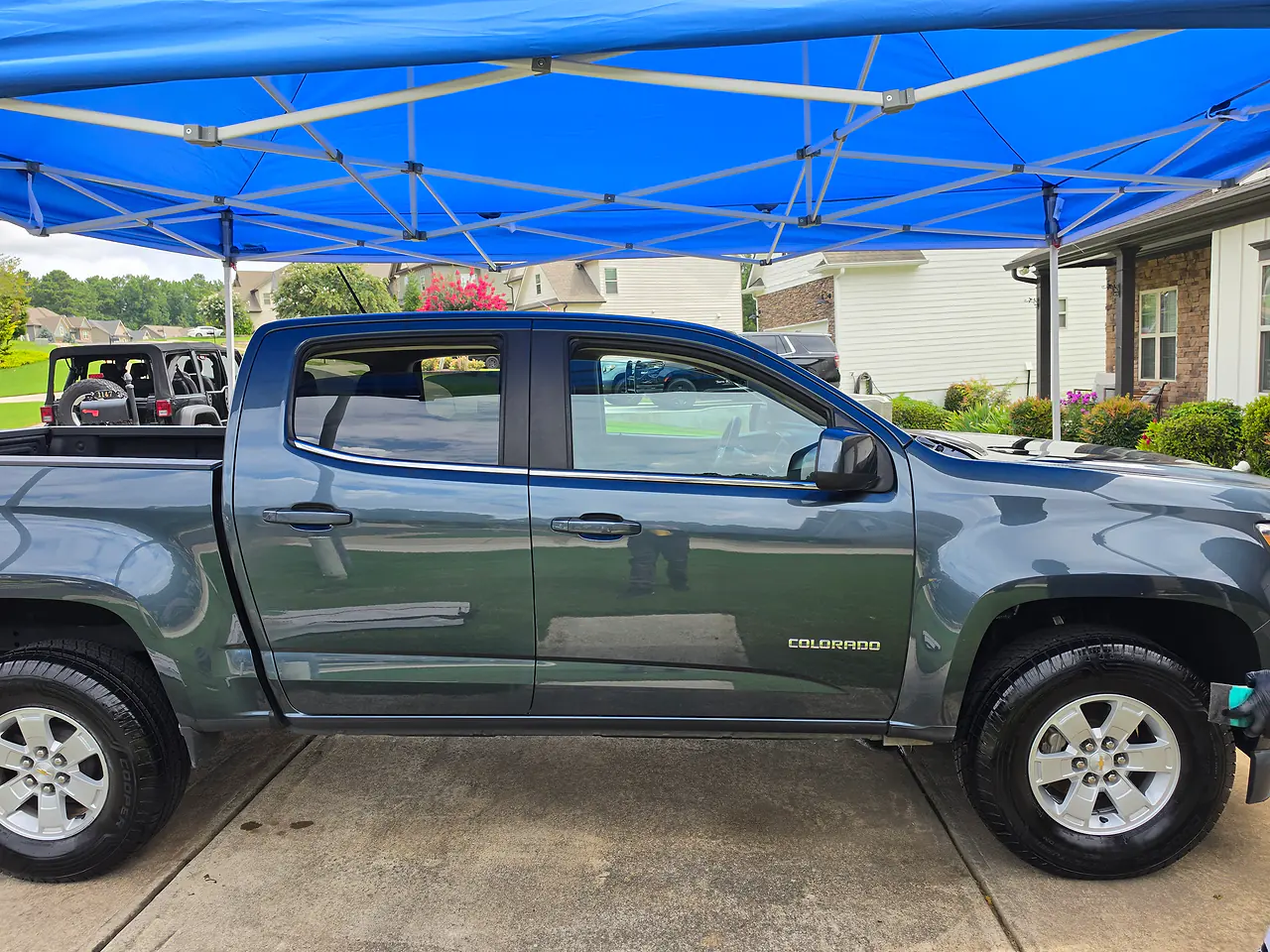

A clean surface and an undamaged surface are not always the same thing. A stubborn outline after cleaning may need a professional look rather than a stronger household cleaner.
Act promptly, without rushing to scrub
Don’t leave a deposit for the next scheduled detail. Vehicle makers recommend removing things like bird droppings and tree sap promptly, because they can mark the finish the longer they sit. There’s no exact number of minutes: heat, sun, the finish and the deposit itself all change how fast it happens. If you can, move the car into the shade before you start.
Fresh bird droppings: a careful first response
- Check your vehicle’s care instructions, especially for matte paint, wraps or film.
- Soften the deposit first, for example with plenty of water or a car-care product made for it, so it lifts instead of being dragged.
- Lift it away with a soft, clean microfiber, turning to a clean side as you go. Don’t rub a dried deposit across the paint.
- Rinse or wipe the area clean and look at it in good light.
If it doesn’t release with a gentle method, stop there and ask a detailer. Pressure is not the answer.
Tree sap removal is a different cleanup problem
Sap clings and smears, and water alone rarely moves it. It usually needs a dedicated remover that is safe for the surface it is on. Please skip razor blades, gasoline, kitchen scouring products and homemade alcohol mixes: they can damage paint, trim and protective layers. Read the label, test where it is directed, and remember that paint, glass, plastic trim, wraps and coatings are different materials that don’t take the same products.
Heavy or widespread sap is slow, careful work, so professional sap removal has its own line: our store has a Sap/Tar Removal add-on for it, priced by severity and booked with a detail.
What remains after the deposit is gone?
| What you see | What it may be | Next step |
|---|---|---|
| Material you can still see or feel | Residue that hasn’t released yet | Further cleaning with a compatible product |
| A ring, shadow or dull patch, with nothing on it | A mark in the finish | An assessment of whether polishing can help |
| Cracking, peeling or missing paint | Damage to the paint itself | A paint repair assessment, not more polishing |
Removing a deposit doesn’t guarantee the finish underneath is unchanged. If a ring, shadow or dull patch remains, more pressure isn’t a reliable fix. A detailer can tell whether it’s remaining residue, a defect that may respond to polishing, or damage outside the scope of detailing.

When polishing is appropriate, and when it isn’t
Some marks left by droppings and sap are in the top of the clear coat and can improve with polishing. Others go deeper. Our one-step paint correction guide explains what polishing can and can’t do; it isn’t a promise of complete restoration. Wet sanding, spot repainting and paint repair are body-shop work and not part of a regular detail.
Special finishes and existing protection
Matte and satin paint, vinyl wraps, paint protection film and coated paint each have their own care instructions; follow them first. Some cleaners can weaken waxes or coatings, so re-protect the area if needed. And don’t polish a spot on a matte finish: a glossy patch on matte paint is a new problem, not a fix.
Reduce repeat exposure
- Check the car for deposits when it has been parked under trees or where birds roost.
- Change where you park when you can.
- Keep a small care kit in the car: a car-safe quick cleaner and a couple of clean microfibers.
- Keep the paint protected, following your protection’s maintenance guidance.
A car cover can help if it is the right cover, used on a clean car; dragging one across dirty paint does more harm than good. For pollen season, see how to remove Georgia pollen.
Ask us about the spot on your paint
Routine cleaning is part of every detail. Stubborn sap or tar has its own add-on, polishing is part of our paint enhancement packages, and body repair is outside detailing. If you aren’t sure which you are looking at, text us or call us and describe it; we’ll tell you honestly what a detail can do. To compare exterior services, see our wash and wax.
Frequently asked questions
Can bird droppings leave a mark after removal?
Yes, a mark can remain. It needs a look in good light; scrubbing harder isn’t the right treatment.
Is rubbing alcohol always safe for sap?
No single chemical is safe on every paint, trim, wrap or protective layer. Follow the vehicle’s and the product’s instructions for that surface.
Will ceramic wax prevent this damage?
Protection can make deposits easier to remove, but it isn’t immunity. Remove deposits promptly and follow your protection’s maintenance directions.
Can paint correction fix every sap or bird mark?
No. Some marks improve with polishing, but some damage is too deep, or the finish isn’t suitable for more correction.
Ready when you are.
Not listed? Enter your address when you book and the store confirms it, including any travel fee or area minimum, before you pay.