
How to Remove Georgia Pollen Without Scratching Your Car
When yellow pollen settles on your car, don’t treat it like harmless dust you can wipe away with a dry towel. The surface also carries grit and road film. A careful wash is a better start than dragging that mixture across the paint.
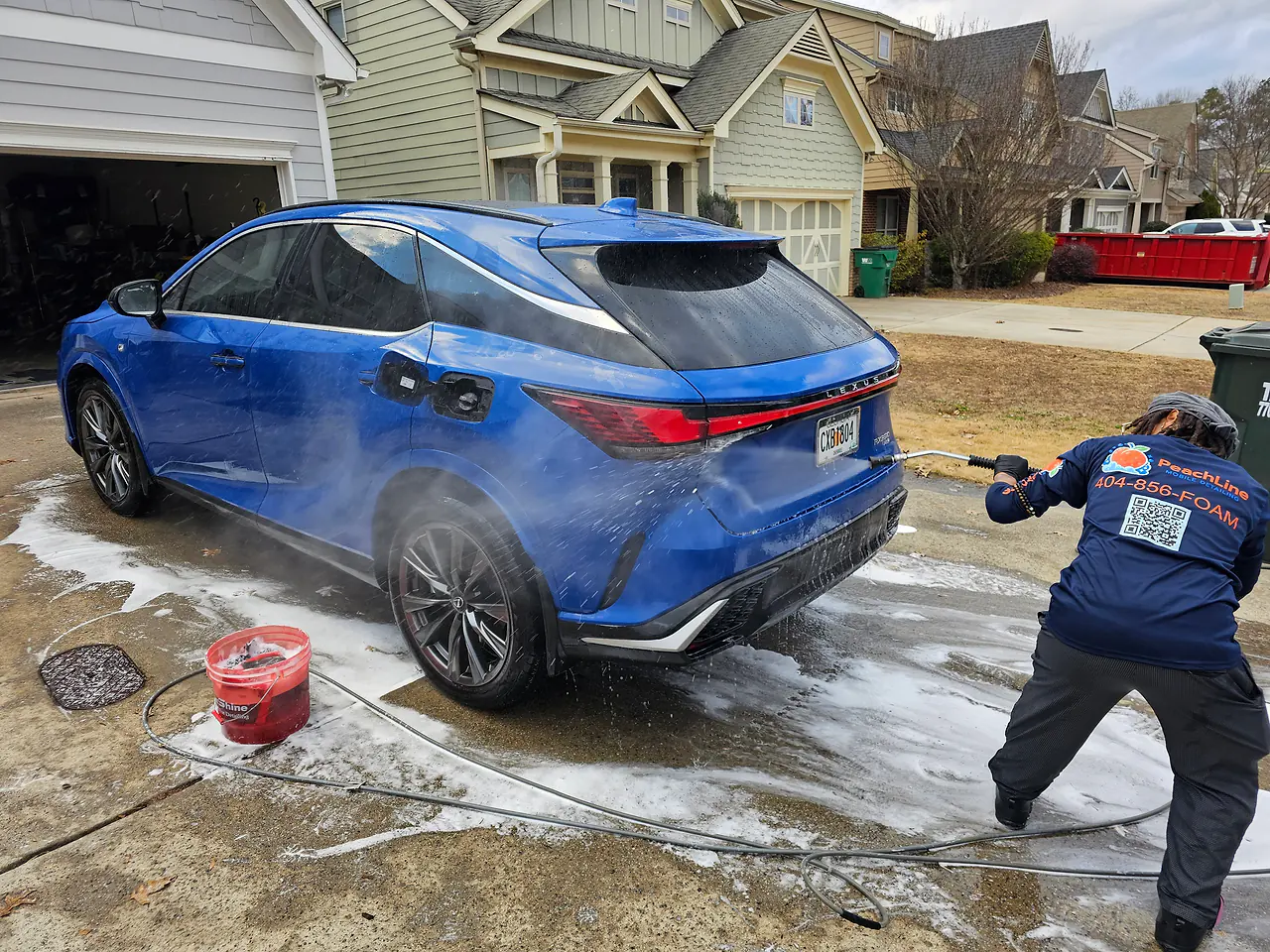

For a daily driver in Marietta or Atlanta, the goal is practical: clean it carefully, keep the paint protected, and expect it to come back while the trees are shedding. You don’t need paint correction because pollen landed on the car.
Why the yellow layer keeps coming back
Much of the yellow dust on Georgia cars in spring is pine pollen. As the University of Georgia’s Field Report explains, pine pollen grains are large enough to see, travel on the wind on warm, dry days, and the first place most people notice them is on their car, as a gritty yellow dust. Many other tree pollens are too small to see, so a car can collect more than the yellow layer shows.
How heavy it gets depends on the trees around where you park and drive, and the season’s weather, so it varies across the metro area and from year to year. This guide is about the car, not allergies.
What to do when the car is coated
- Choose a cool, shaded spot, so water and soap don’t dry on the paint while you work.
- Rinse first to float off as much of the loose pollen and grit as you can before anything touches the paint.
- Wash gently with clean tools: a proper car shampoo and a clean wash mitt, rinsed often, following your vehicle’s care guidance.
- Dry it with a clean, soft drying towel or air, instead of letting it air-dry into spots.
Our washing guide walks through the full method. Every step is about reducing the risk of scratches, not removing it; no wash technique is completely scratch-proof.
Three tempting shortcuts to reconsider
| Shortcut | Why reconsider it | Better direction |
|---|---|---|
| Dry-wiping the car | The surface carries grit as well as pollen | Remove it with a proper rinse and wash |
| Waiting for rain to do the job | Rain isn’t a controlled wash and dry, and can leave residue and spots | Inspect after the rain and clean what remains |
| Rubbing hard at a stubborn spot | What’s left may not be loose pollen | Work out what the remaining mark is first |
Rinseless and waterless wash products aren’t unsafe by definition, but they are designed for light dirt with plenty of lubrication and a careful technique. They are not a license to wipe a heavily coated car with a towel.
Is the remaining mark pollen, sap or water spotting?
Cars parked under trees and near sprinklers pick up more than pollen. A sticky dot may be sap; a pale ring may be a dried water spot. Ordinary pollen that is washed off doesn’t usually call for polishing. If marks remain after a careful wash, read water spots on car paint or bird droppings and tree sap before reaching for anything stronger.
Does wax or a ceramic treatment help?
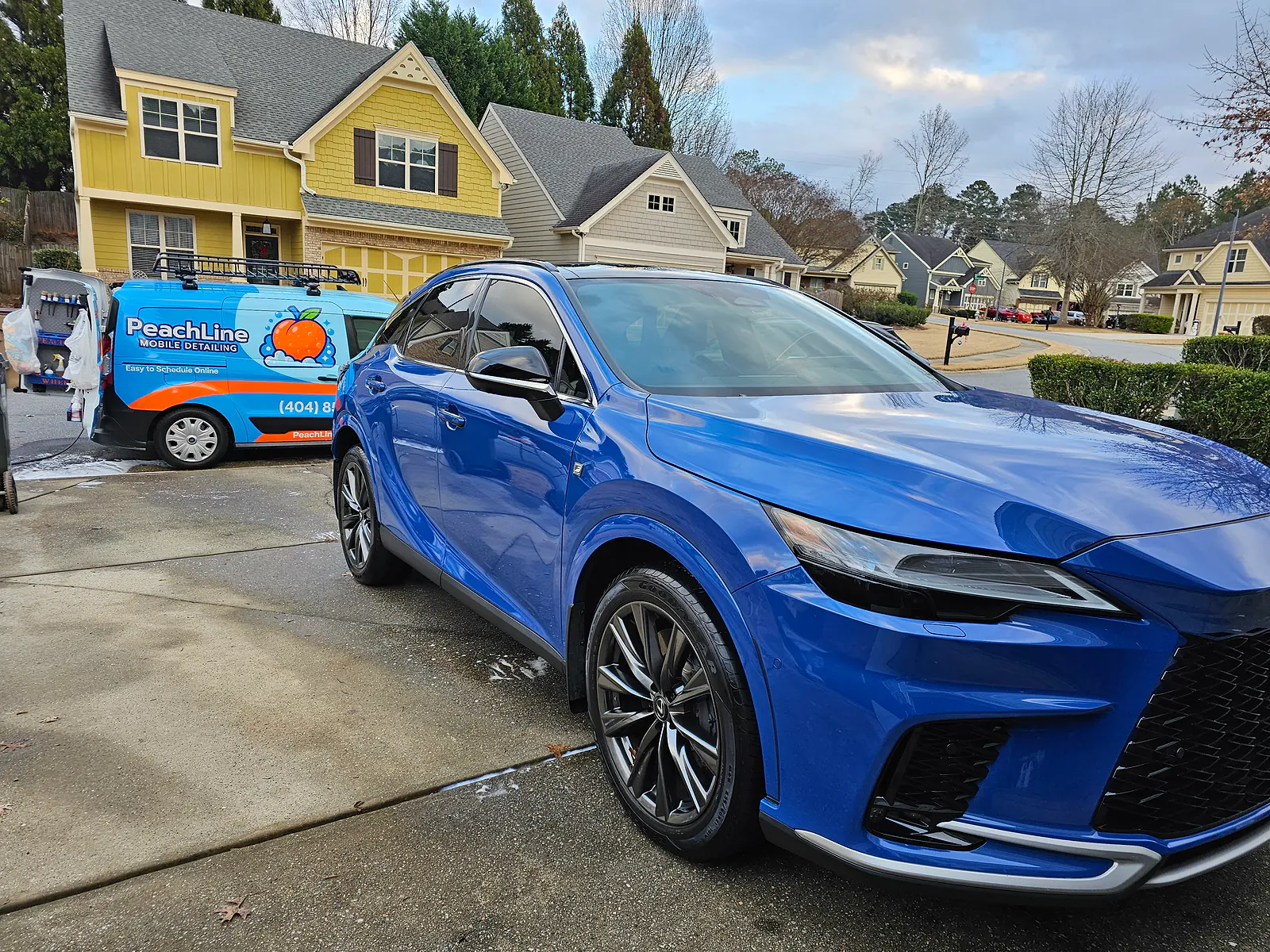
Protection makes the paint slicker, so pollen and grime rinse off more easily and the next wash is gentler. It doesn’t stop pollen landing on the car, and it doesn’t replace washing. Follow your protection’s care directions; ceramic wax vs. ceramic coating explains the options. You don’t need a coating to get through pollen season.
Interior cleanup after pollen exposure
- Close the windows and sunroof when you park during heavy pollen days.
- Shake out or vacuum the mats, where tracked-in pollen and debris collect.
- Wipe dusty interior surfaces with a product suited to each material.
- Check your owner’s manual for the cabin air filter; replacing it is a maintenance item, not part of a detail.
A clean interior is more pleasant in pollen season, but a detail isn’t a medical treatment, and we don’t make allergy claims.
A practical local routine
During heavy pollen weeks, look at the car often and wash it when the layer builds up, more often if it is parked outdoors under pines than if it lives in a garage. There’s no universal schedule: the right interval depends on where the car is parked and how it is used. For a year-round plan, see how often to detail your car in Atlanta.
What to book
If it’s mainly the outside, an exterior service is enough: our wash and wax cleans the paint and adds machine-applied ceramic wax. If pollen and spring grime have built up inside too, a full detail takes care of both. See mobile detailing for what each package includes. Routine pollen is cleaned as part of the wash; it doesn’t need clay or polishing.
Frequently asked questions
Will rain wash pollen off my car?
It can move some of it, but rain isn’t a controlled clean and dry. Look at the car afterward and wash what remains.
Can I dust it off with a microfiber towel?
A clean towel doesn’t make a dirty surface grit-free. Avoid dry-wiping a dusty car; rinse and wash it instead.
Does yellow pollen mean I need clay or polishing?
No. Those treatments address different problems. Reassess the paint after a careful wash before deciding anything else is needed.
Will wax keep pollen away?
No. Protection makes pollen easier to wash off, but it doesn’t stop it from settling on the car.
Ready when you are.
Not listed? Enter your address when you book and the store confirms it, including any travel fee or area minimum, before you pay.