One-Step Paint Correction & 6-Month Ceramic Wax: Our Process
One-step paint correction uses one abrasive polishing stage to improve light swirls, haze, and the clarity of your paint. It is more than applying wax, but it is not a promise to remove every scratch.
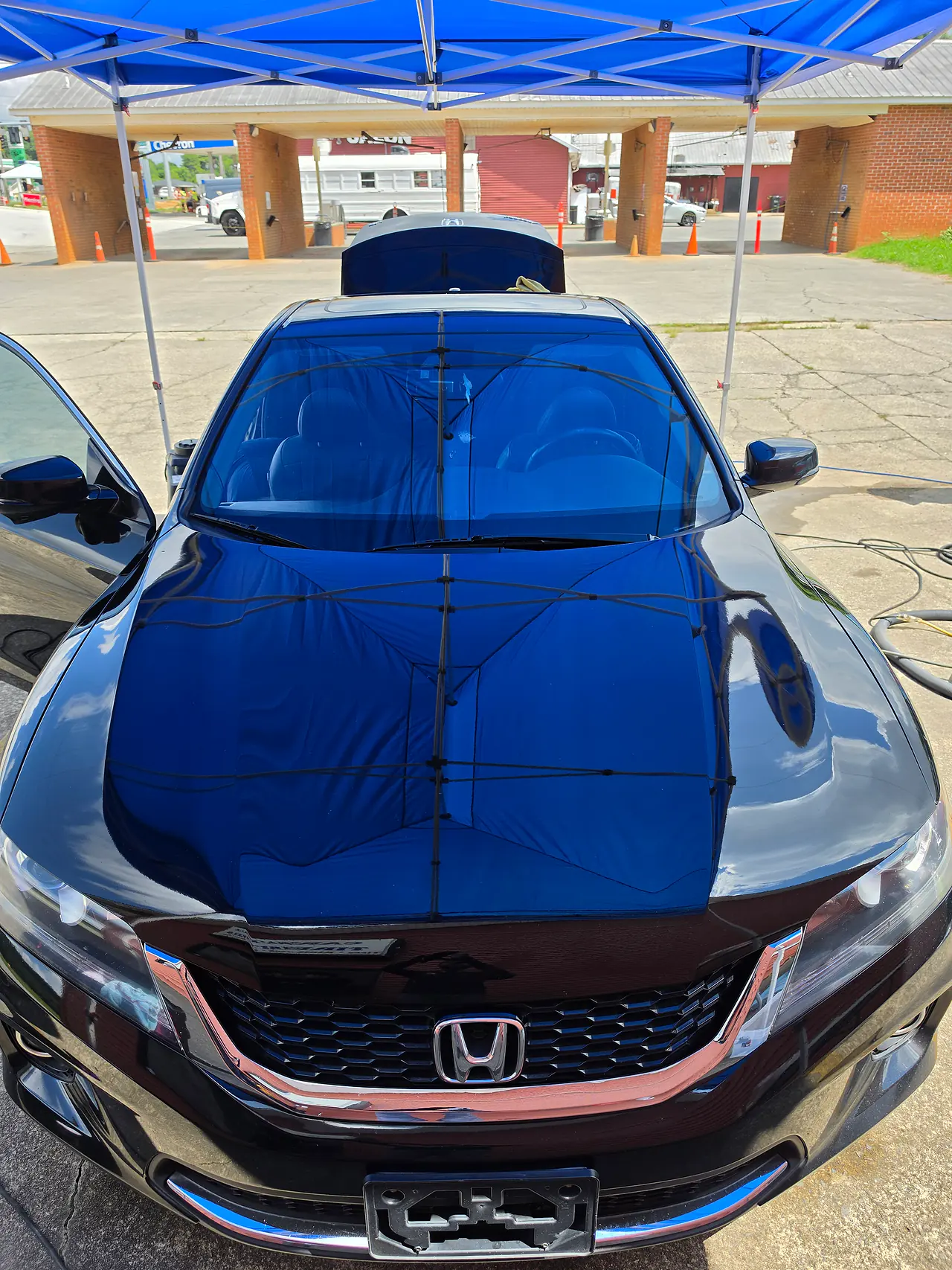
At PeachLine, the work starts with decontamination, clay treatment and panel preparation, then one-step machine polishing with a dual-action or gear-driven polisher, chosen for the paint. We finish with our ceramic wax, rated for up to six months of protection. Here is what each part does, and why the preparation matters as much as the polishing. In the store this service is called 1-Step Paint Enhancement: same work, different name.
What “one-step” actually means
“One-step” describes one abrasive correction and finishing stage. It doesn’t mean a single pass over the car, and it doesn’t mean one product does everything from washing to protection. The car is still washed, decontaminated and prepared first, and protected afterward.
A multi-stage correction uses separate cutting and refining stages for paint that needs more work. It removes more defects where the paint allows it, takes longer, and removes more clear coat. One-step correction sits in between: a real, visible improvement for paint with light to moderate wash marks, without the time and clear-coat cost of heavy correction.
| Approach | Main purpose | What it does not promise |
|---|---|---|
| Wash and protective wax | Clean the paint and add a protective layer | Abrasive removal of swirl scratches |
| One-step correction plus protection | Improve suitable defects in one polishing stage, then protect | Removal of every defect, or restoring failing paint |
| Multi-stage correction | More extensive correction and refining where the paint allows it | Unlimited safe removal of clear coat |
This guide describes the one-step service we sell. Multi-stage correction is mentioned so you can compare; two-step paint correction is coming to PeachLine soon.
What we look at before polishing
Polishing removes a very thin layer of clear coat to level the surface. Before any of that, the paint itself decides what is sensible:
- The kind of defect. Light swirls and haze from washing are what one-step work is for. An isolated scratch that stands out as a distinct line, a chip, or a key mark often goes deeper than one stage can reach.
- Repaints and touch-ups. Body-shop paint and touch-up spots can behave differently from factory paint.
- Edges, trim and badges. Paint is often thinner on edges and body lines, and textured trim and badges need to be kept clear of the pad.
- Failing finishes. Peeling, flaking or chalky clear coat is a paint repair question; polishing can make it worse.
- What you are hoping for. A clearer, glossier finish with fewer visible swirls is realistic. A flawless, scratch-free car usually isn’t a one-step result.
Our preparation: wash, decontamination, clay and panel wipe
Polishing over dirt or bonded contamination drags it across the paint. So the preparation comes first, in this order:
- A thorough wash removes loose dirt before anything works directly on the paint.
- Chemical decontamination loosens suitable bonded contamination, such as iron fallout and tar, with products chosen for the surface.
- Lubricated clay treatment lifts the bonded contamination the chemicals leave behind, so the surface is smooth before it is polished. Clay is not a swirl remover; it prepares the paint for the polish that is.
- A panel wipe removes residues that would get in the way of the polish, so the pad works on the paint itself.
Matte paint, vinyl wraps, paint protection film and damaged finishes are not automatically candidates for this gloss-paint process. Tell us about them when you book, and we’ll talk about what fits. For more on bonded contamination, see why paint still feels rough after a wash.
One-step polishing: the machine is chosen for the paint
We polish with a dual-action machine: either a free-spinning dual-action polisher or a gear-driven one. Both are dual-action tools; a gear-driven machine is not the same as a rotary buffer. The pad and polish are matched to the paint, and the car is worked in small sections so each area gets controlled, even attention.
The goal is a clearer, more even finish with an appropriate level of correction for your vehicle. A machine that works well on one paint may not be our best choice for another, so we choose the tool and polish for the surface and the result we can safely achieve, rather than promising the same percentage of scratch removal on every car.
You may notice we don’t publish speed settings, pass counts or a recipe here. Those depend on the paint in front of us, and a number copied from a web page is a good way to damage a finish. Clear coat is also finite: correction can’t be repeated indefinitely without consequences, which is one more reason to protect the result.
Checking the result before protection
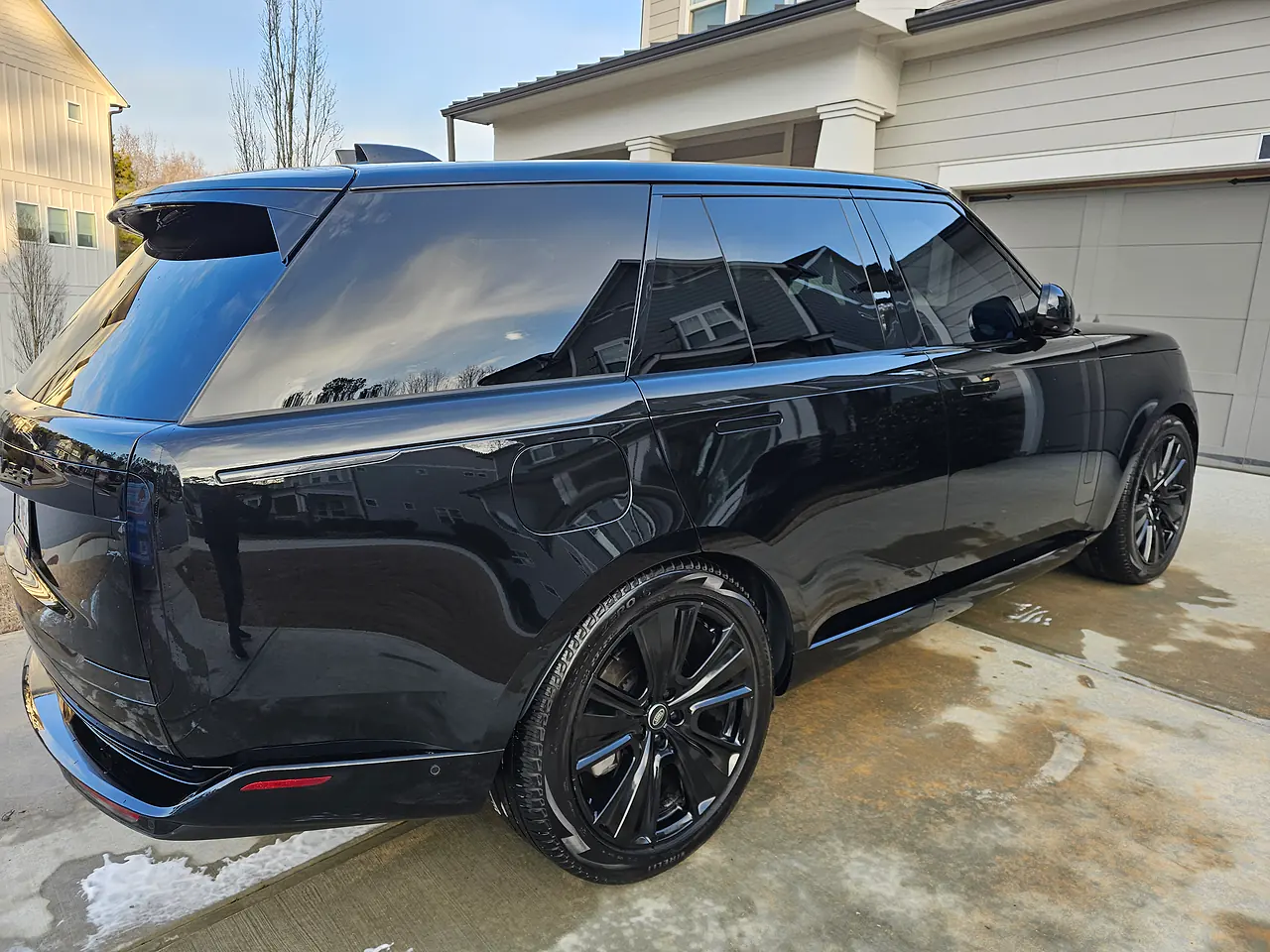
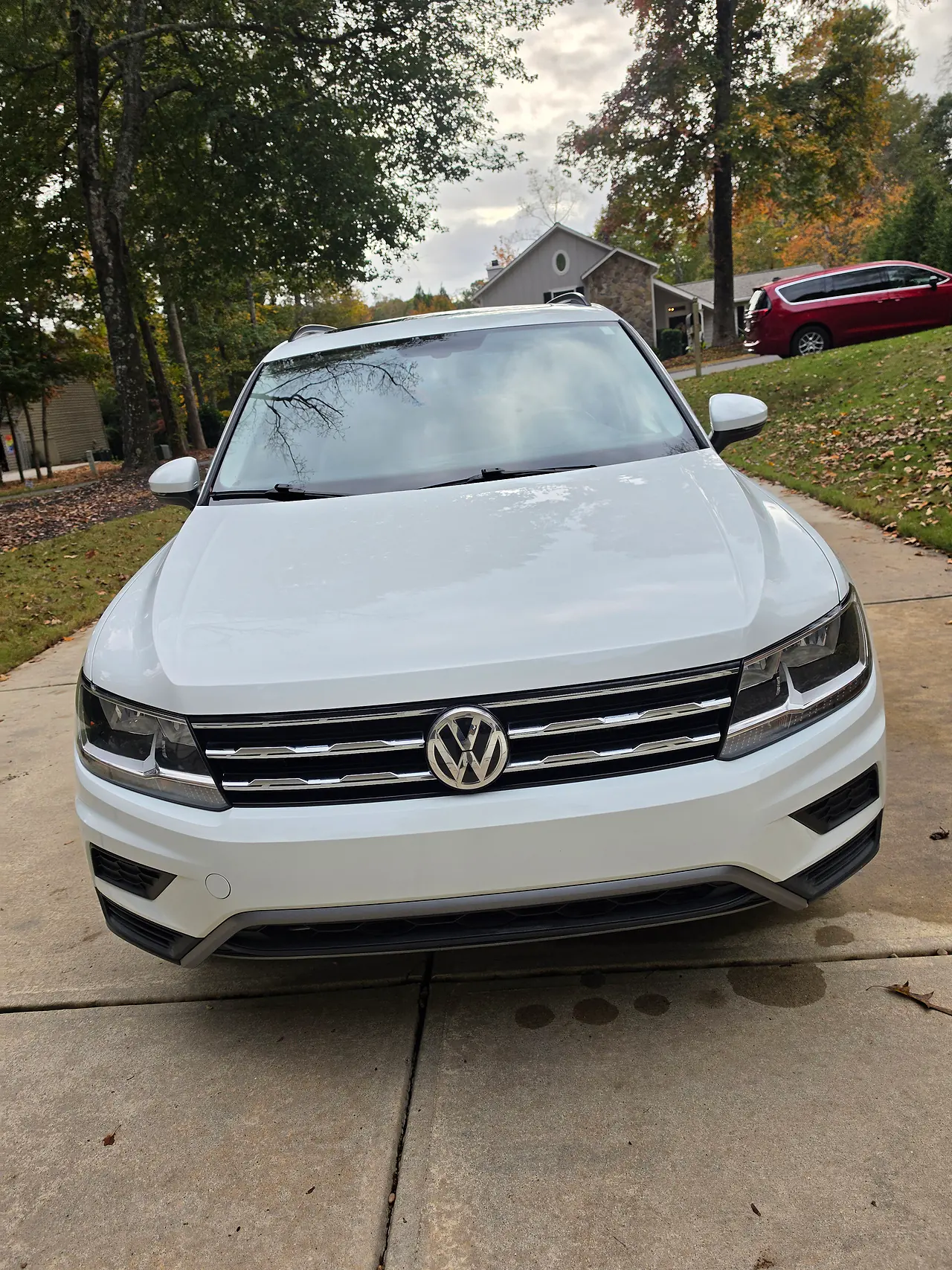
Before the wax goes on, the polished paint is inspected and polishing residue is removed, so you see the real finish rather than one hidden by oils and fillers.
Why the ceramic wax comes after correction
Correction and protection do two different jobs. Polishing changes the surface; it is what reduces the swirls. The ceramic wax adds gloss, water repellency and a protective layer on top, and makes routine washing easier. Ours is a machine-applied SiO2 ceramic wax rated for up to six months of protection.
“Up to” matters. How long it lasts depends on how the car is parked and washed, the weather it lives in, and the products used on it afterward. Ceramic wax is not a multi-year ceramic coating, it isn’t stone-chip protection, and it doesn’t make paint scratch-proof. For a side-by-side look at the protection options, read ceramic wax vs. ceramic coating.
Results and honest limits
A good one-step result shows up in sunlight: fewer visible wash swirls, less haze, sharper reflections and a deeper-looking color. What usually remains is anything deeper than one stage can reach responsibly, such as isolated scratches, chips and etched marks.
Sometimes leaving a deep scratch is the right decision. Chasing it can take more clear coat than the rest of the panel can spare. We would rather tell you what stayed than thin your paint to hide it.
Caring for the finish, and choosing the right service
Careful washing is what keeps the result. The method in how to wash your car without swirl marks reduces the risk of putting new marks in, though no wash method is completely risk-free. New wash damage can still happen, and the wax wears with use.
Our weather policy explains how we handle a wet day. For the service itself, see mobile detailing.
Two packages in our store include one-step paint enhancement and the six-month ceramic wax:
- Executive Detail: everything in our Premium Detail, inside and out, plus the paint enhancement and ceramic wax.
- Exterior Detail + Basic Paint Enhancement & Ceramic Wax: the exterior only.
Our wash and wax applies the ceramic wax by machine too, but it does not polish: it protects the paint without removing swirls. The store shows the exact price for your vehicle before you pay.
Frequently asked questions
Will one-step correction remove every scratch?
No. It can improve suitable light defects, but deeper scratches, chips and paint failure may remain. The condition of the finish determines what is reasonable.
Does the six-month wax make the correction last six months?
They are different things. Abrasive correction changes the surface; the protective wax wears with use and is rated for up to six months. Future washing and exposure can introduce new defects either way.
Is machine-applied wax the same as paint correction?
No. A machine can spread a non-abrasive protective product without correcting scratches. The polishing stage and the products used decide whether abrasive correction is happening. Our wash and wax applies wax by machine; our paint enhancement service polishes first.
Can a mobile detailer do paint correction?
Yes, with a suitable work area, the right preparation, equipment and lighting, and the right weather. We confirm the location and conditions rather than promising it in every parking space.
How much does it cost and how long does it take?
It depends on the vehicle. The store shows the price for your vehicle size and the appointment length before you pay, so you never have to guess.
Packages with one-step paint enhancement
Prices start here and depend on your vehicle. The store shows the exact total before you pay.
Executive Detail
Everything in Premium, plus a light polish for minor swirls and machine-applied wax.
- Everything in Premium, plus
- 1-step paint enhancement and polish
- 6-month ceramic wax
- Air cabin treatment (new car smell)
About 5 hours
From $599.99
Choose packageExterior Detail + Basic Paint Enhancement & Ceramic Wax
Exterior detail with a 1-step polish for light swirls and 6-month ceramic wax.
About 3 hours
From $349.99
Choose package
Ready when you are.
Not listed? Enter your address when you book and the store confirms it, including any travel fee or area minimum, before you pay.