
What does tree sap look like on a car?
Tree sap usually shows up as small clear, amber or brown drops, often in clusters on the roof, hood, trunk and windshield of a car parked under trees. Fresh sap feels tacky; older sap hardens into a raised bump.
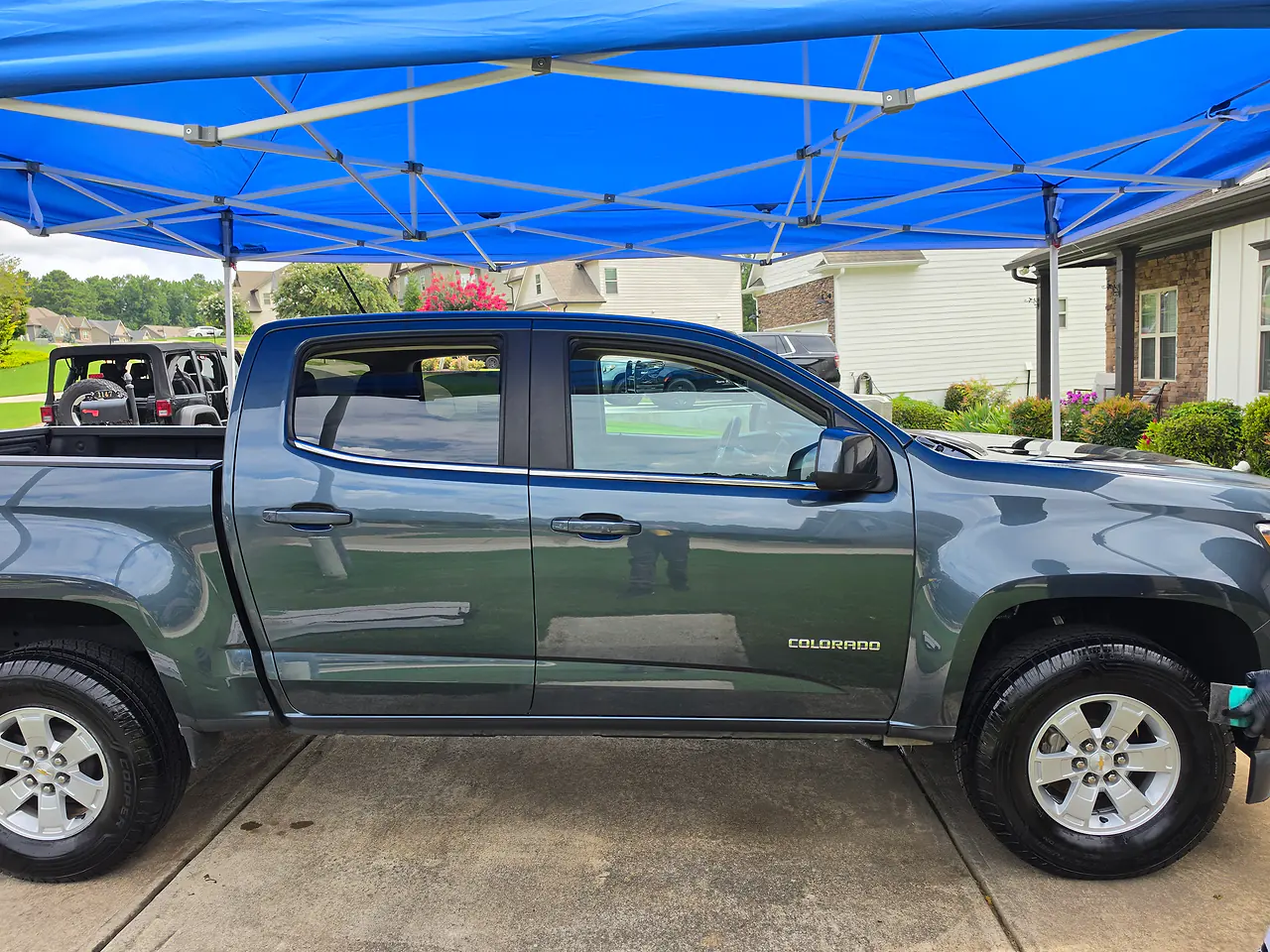

Fresh sap vs. old sap
Fresh sap feels tacky and may still look wet or glossy. Older sap hardens into a raised bump that looks like dried glue and doesn’t wipe off. Sun and heat speed that up, so sap on a car parked outside in summer can harden quickly.
Mist, specks and honeydew
Some trees leave a fine mist of tiny sticky specks instead, which can make the whole car feel rough or tacky. A sticky film that comes with dark, sooty spots is often honeydew, left by insects feeding on the tree, rather than sap itself.
Things that look like sap but aren’t
- Water spots: flat and chalky, not raised or sticky.
- Bird droppings: white or dark splatters.
- Tar: small black spots, mostly low on the panels behind the wheels.
- Pollen: a yellow-green dust that sits on top of the paint.
Why you shouldn’t leave it
The longer sap sits, especially in heat and sun, the more it can mark the finish. Don’t scrape it with a fingernail or a razor blade, and skip gasoline, kitchen scouring products and homemade alcohol mixes: they can damage paint, trim and protective layers.
How we remove it
We soften the sap so it lifts instead of being dragged across the paint, use a dedicated remover that is safe for the surface, and only polish gently if the remover doesn’t work. Then we protect the area with ceramic wax as needed. Heavy or widespread sap has its own Sap/Tar Removal add-on, priced by severity and booked with a detail; see tree sap removal. If you aren’t sure what you are looking at, text us a photo and we’ll tell you.
Ready when you are.
Not listed? Enter your address when you book and the store confirms it, including any travel fee or area minimum, before you pay.